
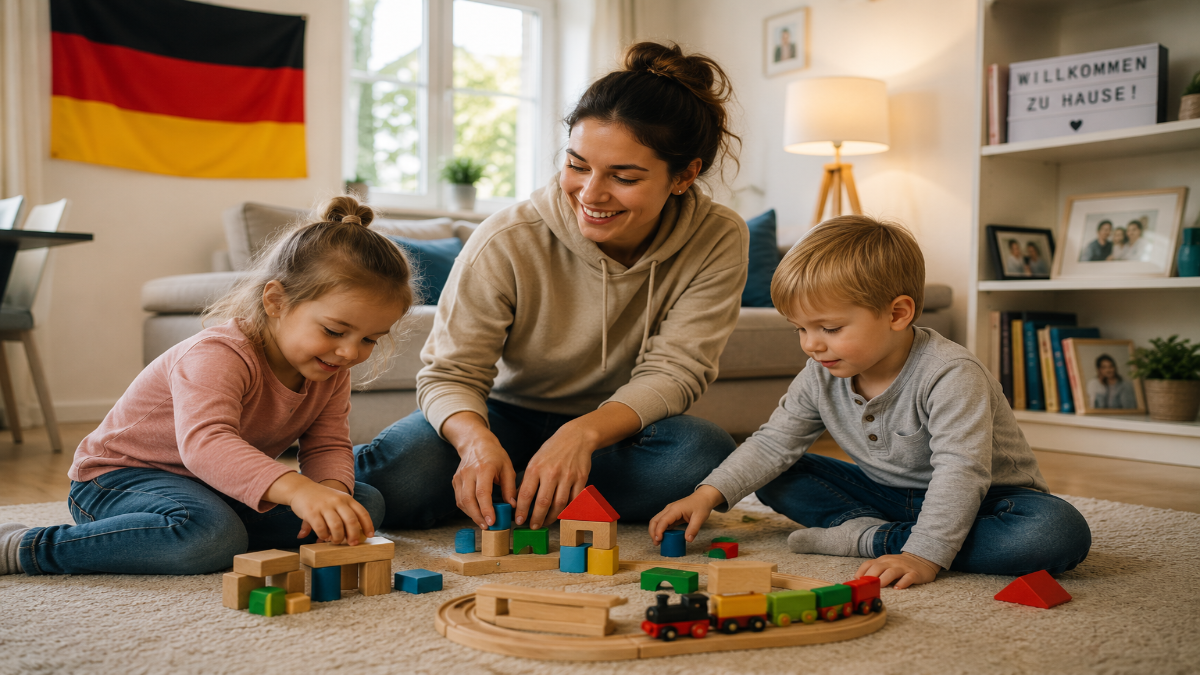
The Au-Pair programme is one of the most misunderstood routes to Germany. Some candidates see it as the fastest way in; others dismiss it as "just babysitting." Both miss the point. Used correctly, an Au-Pair year is a genuine bridge — one that builds language fluency, cultural confidence and a legal foothold in Germany that significantly improves your options for what comes next.
What Au-Pair Actually Is (and Isn't)
Au-Pair is a cultural exchange programme — regulated under German law — where you live with a host family, help with childcare and light household tasks, and in return receive free accommodation, meals, health insurance and a monthly pocket allowance (€280–€350). You are not an employee. You are not a student. You are a temporary guest with a structured, legal status.
What it is not: a fast track to a job, a career pathway in itself, or a shortcut around the language requirement. Candidates who come expecting a "soft landing" that avoids hard work will be disappointed.
Eligibility reminder
Au-Pair in Germany is open to female candidates aged 18–25, with at least an A2 German certificate. Basic German communication is essential to function in a host family.
What You Actually Gain in a Year
- Real German immersion: living inside a German-speaking household is language training that no classroom can fully replicate. Most candidates go from A2 to solid B1 within 8–10 months of genuine engagement
- Cultural fluency: understanding how German families, systems and workplaces actually function — not from a textbook, but from daily experience
- An established German address and network: small but valuable when you later apply for Ausbildung or further training
- Confidence: navigating daily life in German removes the fear factor that many candidates carry into their Ausbildung process
The Transition: Au-Pair → Ausbildung
This is the route that makes Au-Pair strategically worthwhile. Here is how the transition works in practice:
Start with A2 minimum (improve to B1 during Au-Pair year)
Before departure, reach A2 with us in Sonipat. During your year, focus on reaching B1 through classes, apps and daily immersion.
During your Au-Pair year: prepare for B2
Enrol in a local Volkshochschule (VHS) or online course for B2 preparation. Many Au-Pairs complete B1 by month 6 and begin B2 preparation in the second half of the year.
After Au-Pair: transition to Ausbildung training
With B2 certificate in hand, you apply for Ausbildung — either independently or through our German partner Next Move. Your year in Germany counts in your favour with employers.
Important: the Au-Pair visa does not automatically convert to an Ausbildung visa. There is a gap between status change. Planning this transition carefully, ideally with a partner in Germany who understands the process, is essential.
Who Should Choose Au-Pair
- You are 18–25 and want international exposure before committing to a full Ausbildung
- Your German is at A2 and you want immersive acceleration to B1–B2
- Your family is more comfortable with a supervised, hosted first year in Germany
- You are open to a 2-step route rather than a direct Ausbildung placement
If you are 26–28 with strong qualifications and B1+ German — go directly for Ausbildung. The Au-Pair route adds a year to your timeline that you don't need.
Is Au-Pair the right first step for you?
Book a free counselling session — we'll map the realistic two-step route together.